
Where Radon Is Most Common in Arizona Homes
When home buyers hear about radon, the first question is often simple: Is radon common in Arizona homes? The answer is more nuanced than a yes or no, which is why understanding Arizona’s radon zones—and how radon behaves inside a house—matters before purchasing a home.
What Radon Zone Is Arizona In?
Arizona is classified entirely as EPA Radon Zone 2, which means the state has a moderate potential for elevated indoor radon levels. Zone 2 areas are defined as having predicted average indoor screening levels between 2 and 4 picocuries per liter (pCi/L). This places Arizona squarely in the middle of the EPA’s radon risk scale.
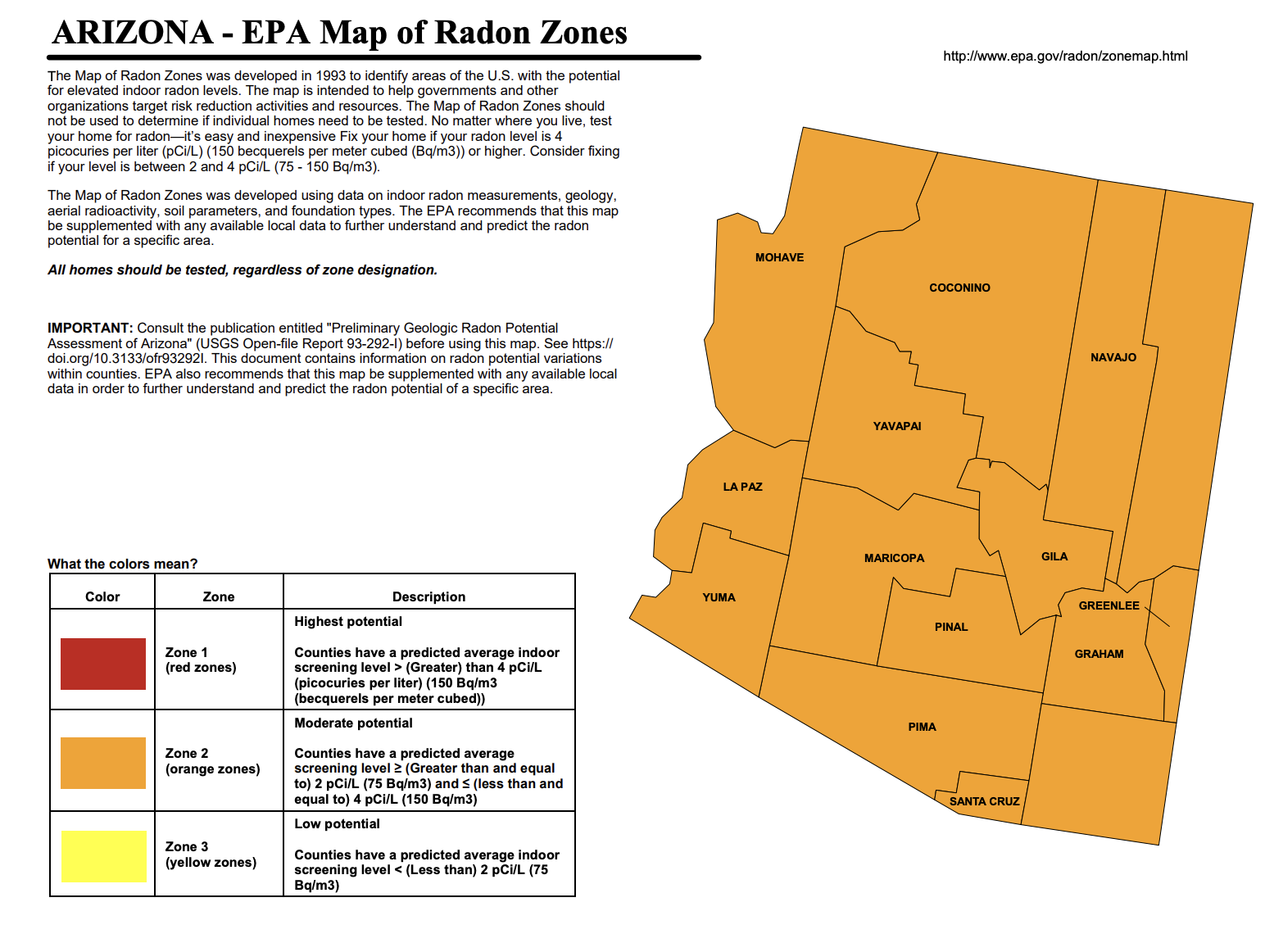
A map of radon zones developed in 1993 to identify areas of Arizona with the potential for elevated indoor radon levels.
It’s important to understand what this designation does (and does not) mean. The EPA’s radon zone map is a planning and education tool based on geology, soil characteristics, aerial radioactivity, and indoor radon measurements. It is not meant to predict radon levels in any specific home, which is why testing is recommended regardless of zone classification.
Does Zone 2 Mean Radon Isn’t a Problem in Arizona?
Not exactly. While Zone 2 indicates moderate potential, homes in Arizona can still test above the EPA’s action level of 4.0 pCi/L. This can surprise buyers who assume radon is only a concern in colder climates or high-risk (Zone 1) states.
Radon levels vary home by home, even within the same neighborhood. Construction methods, foundation type, soil conditions, and ventilation all play a role, which is why two nearby homes can produce very different test results. This variability is the reason radon testing is commonly recommended during real estate transactions, even in states like Arizona.
Where Does Radon Come From in Arizona Homes?
Radon is a naturally occurring radioactive gas released from the breakdown of uranium in soil and rock. In Arizona, certain soil compositions and geological features allow radon gas to move upward from the ground and enter homes through contact with the earth.
Once radon enters a home, it can accumulate indoors especially in areas with limited airflow. This makes the design and layout of the home just as important as its location when evaluating radon potential.
Where Is Radon Most Common Inside a House?
Radon is most commonly found in the lowest livable level of a home, because that is where the structure has the most direct contact with the soil. In Arizona, this often means slab-on-grade homes rather than basements, which are less common in the region.
Even without a basement, radon can still be present. Slab foundations can have small cracks, expansion joints, or openings around plumbing penetrations that allow radon gas to enter. Because radon is colorless and odorless, these entry points are not something a buyer can detect without testing.
Can Radon Be Found in Living Areas?
Yes. While radon typically enters at ground level, it does not stay confined there. Radon gas can move upward through a home via natural air pressure differences, HVAC systems, and everyday air movement.
This means radon may be detected in main living areas, bedrooms, or offices, especially if those spaces are built close to ground level. For buyers, this reinforces why professional testing focuses on livable spaces rather than just utility rooms or garages.
Do Newer Homes Have Less Radon?
Not necessarily. New construction does not guarantee lower radon levels, even in Arizona. In some cases, newer homes may actually test higher due to tighter building envelopes that reduce natural ventilation.
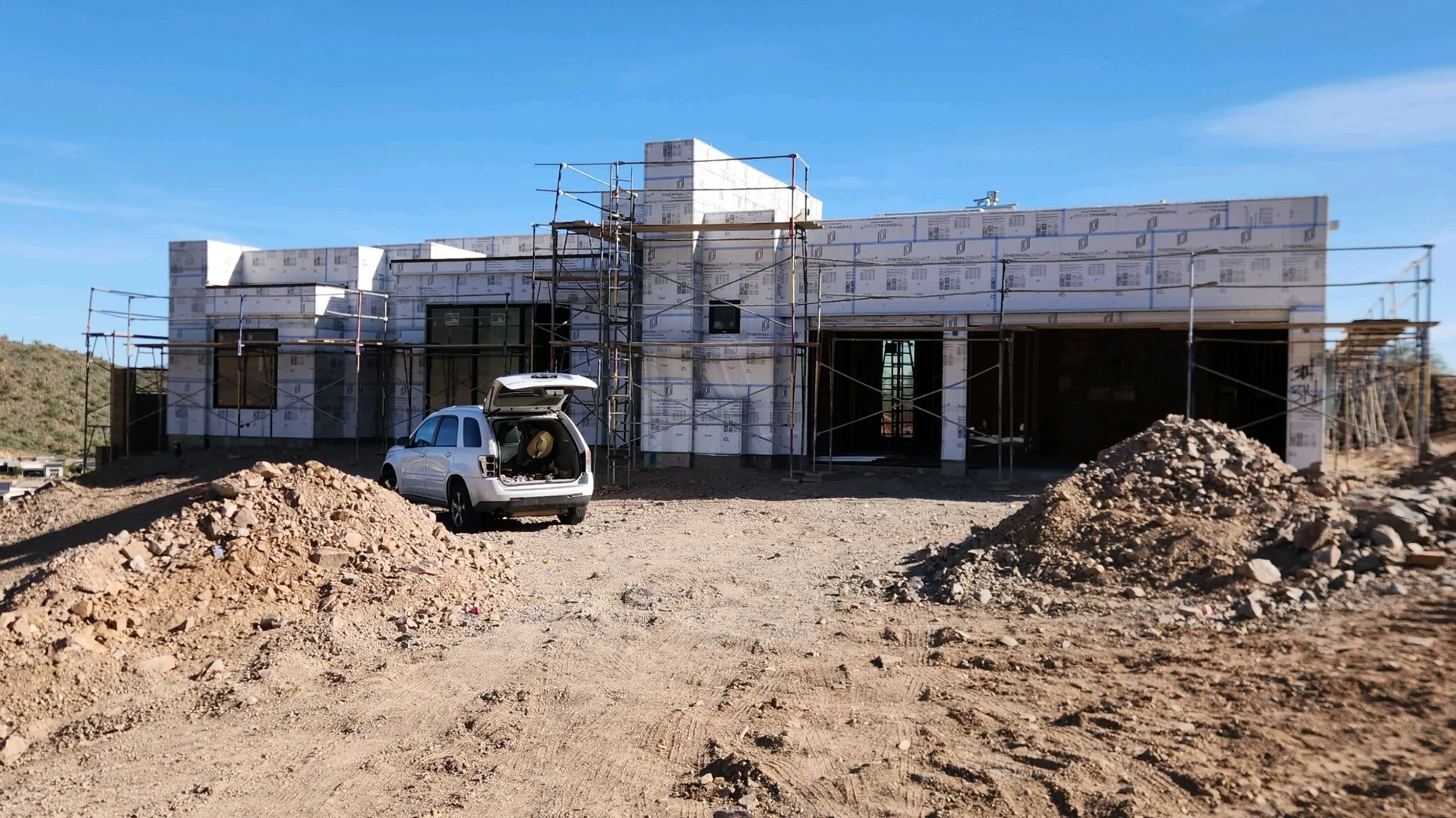
Just because a home is a new, it does not guarantee lower radon levels even in Arizona.
Modern energy-efficient construction helps control temperature but can also trap gases indoors. Without proper mitigation features or testing, radon can accumulate regardless of a home’s age, which is why newer homes should not be assumed to be radon-free.
When Do Buyers Usually Test for Radon?
Most buyers test for radon during the home inspection period, before finalizing the purchase. This timing allows buyers to understand indoor radon levels while they still have options available to them in the transaction.
From a real estate perspective, radon testing is often framed as an informational step rather than a pass-or-fail condition. The goal is awareness and informed decision-making, not alarm, which keeps the process constructive for everyone involved.
Why All Arizona Homes Should Be Tested
The EPA recommends testing all homes, regardless of geographic zone, because radon levels are influenced more by individual home conditions than by statewide averages. Arizona’s Zone 2 classification supports this guidance
Testing is the only way to know a home’s radon level. Because radon cannot be seen or smelled, even homes that appear well-built and well-maintained can have elevated readings. Understanding this closes the gap between perception and reality for Arizona home buyers.
What You Need to Know About Arizona Radon Testing
Radon in Arizona homes is best understood as a localized, home-specific issue rather than a statewide problem or non-issue. While Arizona is entirely classified as Zone 2, individual homes can still experience elevated radon levels depending on how and where they are built.
For buyers, radon testing ensures that they have the right information at the right time. A balanced understanding about radon helps real estate conversations stay grounded, informed, and focused on making confident decisions.